Skip to content

Conversational AI Transforming Document Creation For Legal & Business
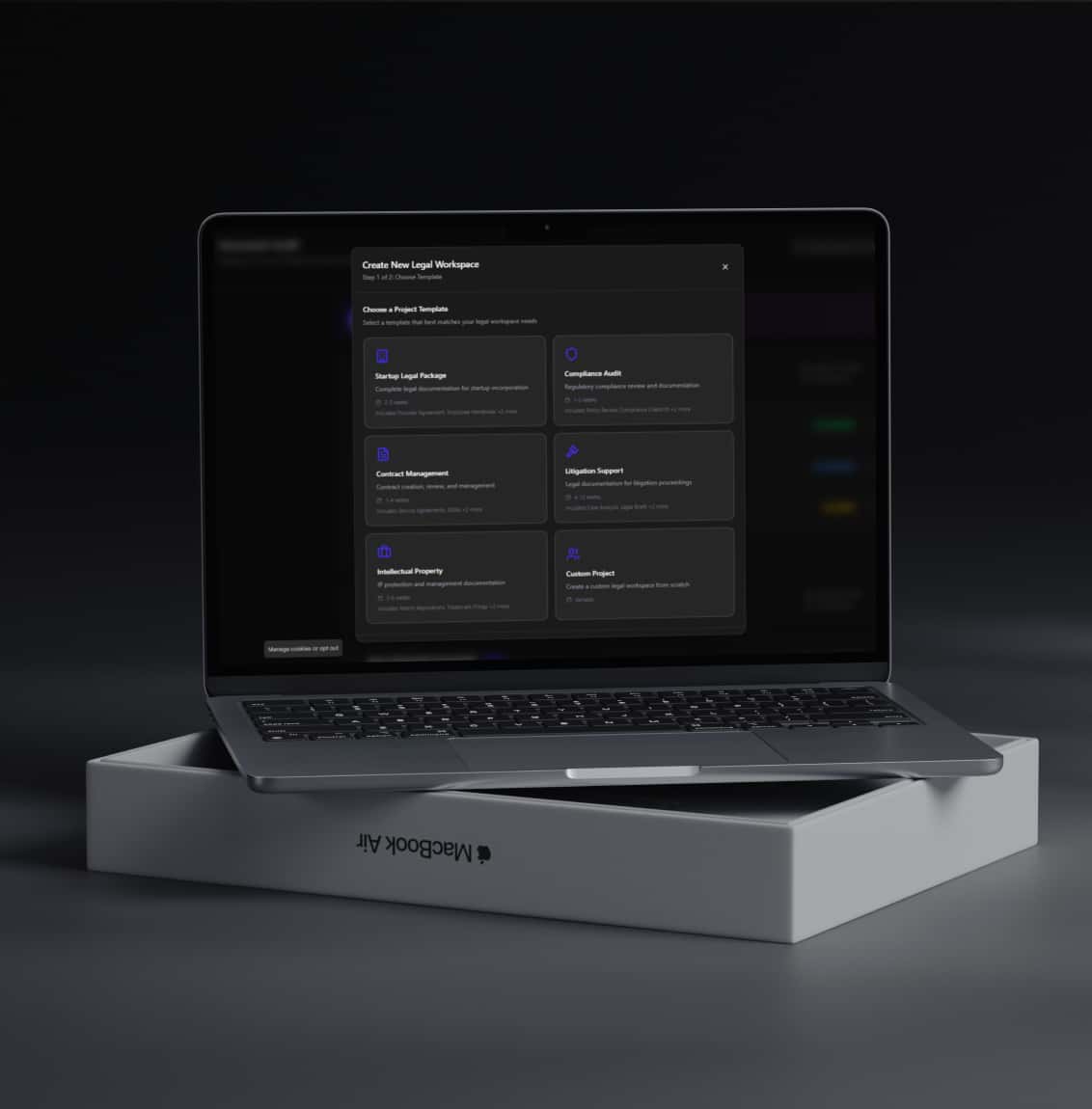
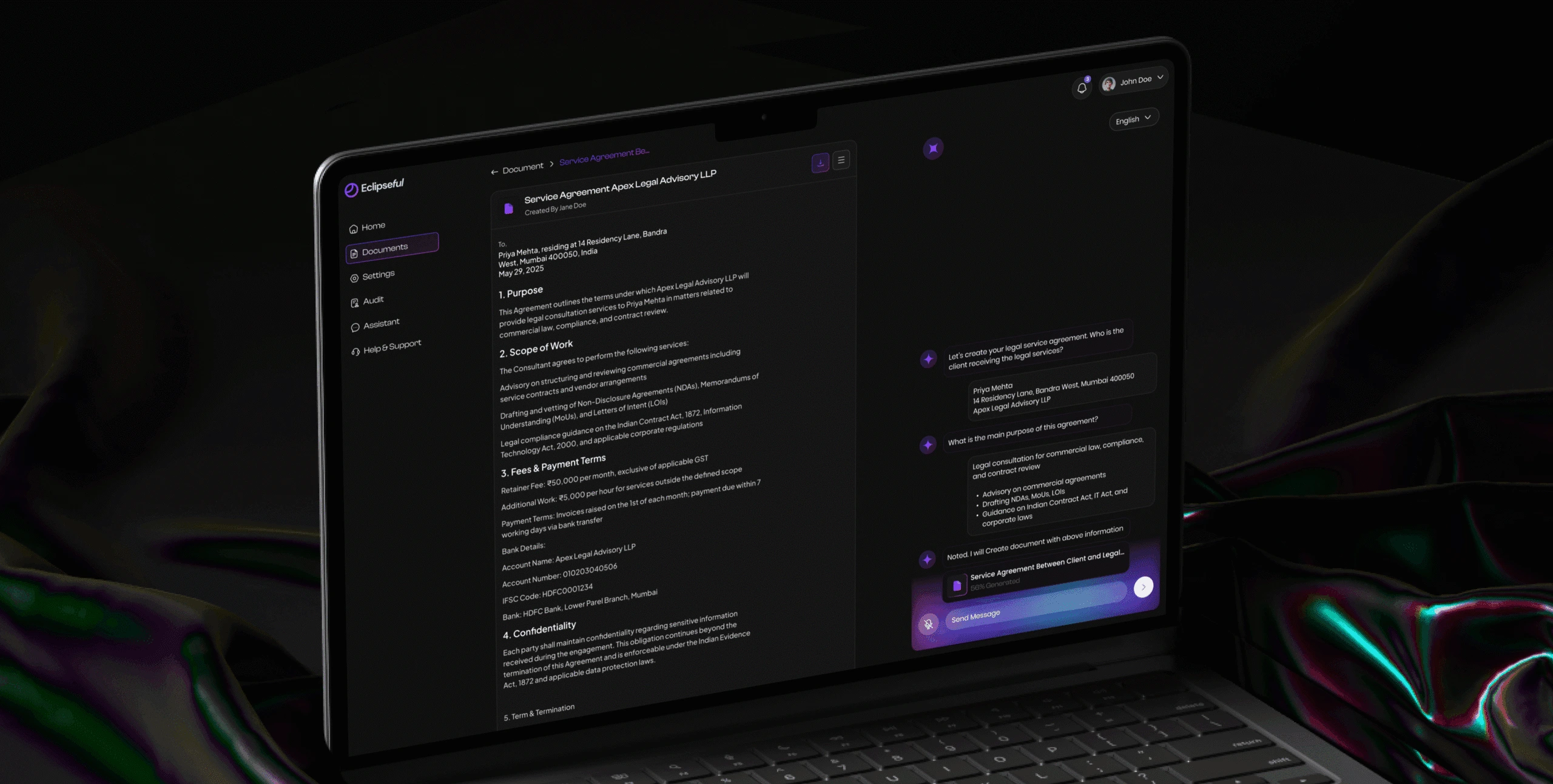
CodeTheorem recognized the growing difficulty professionals face in drafting legally sound documents due to rigid form structures, manual errors, and inaccessible legal jargon. To solve this, CodeTheorem developed an AI-powered conversational system that dynamically guides users—via voice or text—through document creation processes based on document-type structures mandated by legal or institutional standards, enabling faster, error-resistant, and jurisdiction-aware document generation.
Problem Statement
Information Overload
Users struggle to recall and enter all required information, leading to omissions and inconsistencies.
Rigid Document Structures
Predefined legal formats vary by use case (e.g., residential vs. commercial agreements), requiring dynamic adaptation that static interfaces can't offer.
Error-Prone Validation
Post-drafting reviews consume significant time due to overlooked legal inconsistencies and formatting issues.
Lack of Accessibility
Professionals prefer hands-free interaction, yet voice-based drafting tools fail under noisy conditions or legal context.
AI Tools & Technology Stack
Advanced tech & tools behind our AI-Powered Travel Applications

Figma

React

Node JS

Python

IOS

Android

Chat GPT

RAG
Solution


Conversational AI Interface
AI understands user intent and asks intelligent, context-aware follow-up questions based on missing or ambiguous fields.
Voice-Enabled Drafting
Noise-robust ASR and legal-jargon-friendly NLU support accurate, hands-free document generation in real-time.
Compliance-Aware Generation
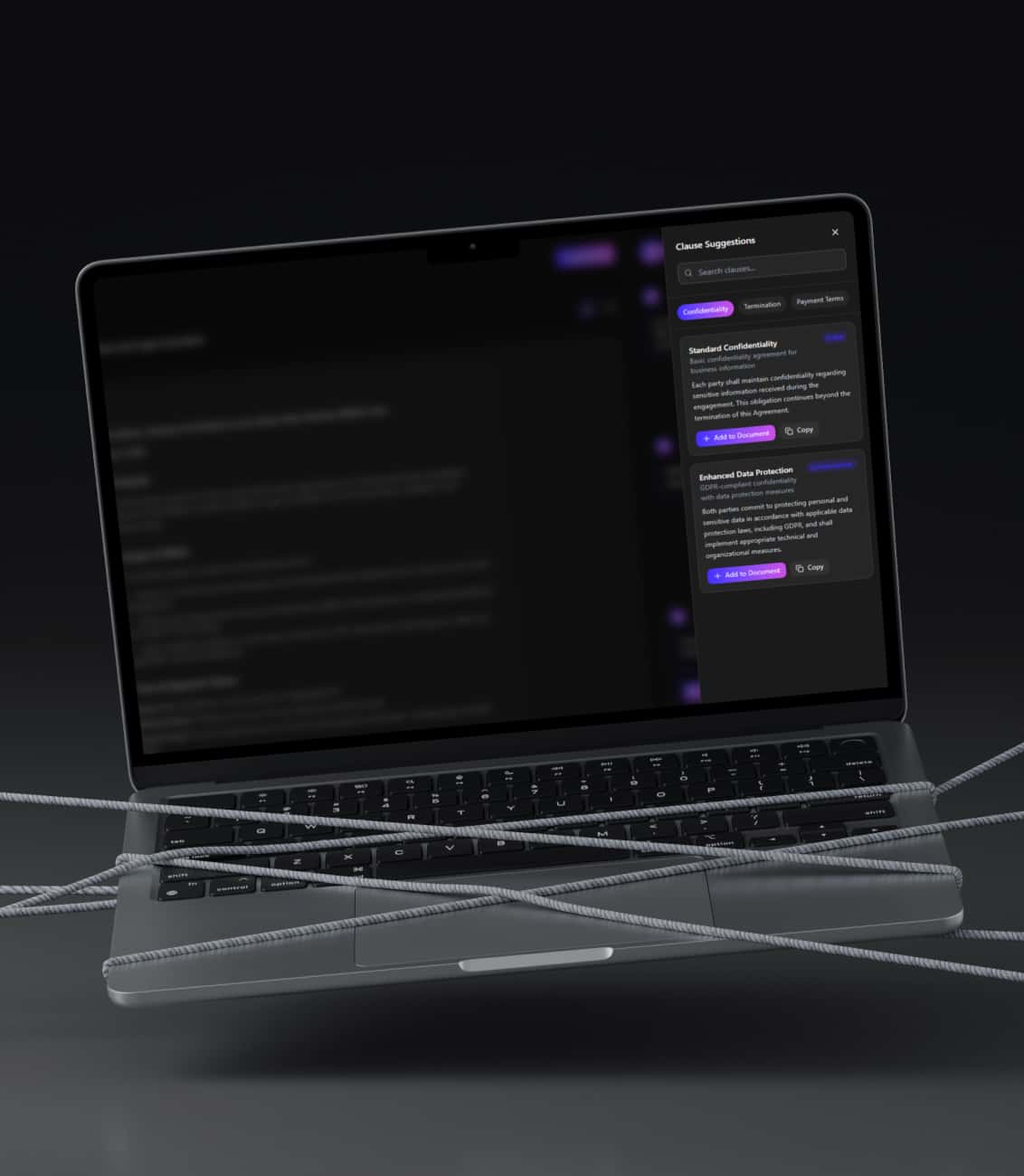
Documents are built using jurisdiction-specific structures with integrated legal databases and dynamic clause referencing.
Multi-Format Output Support
Users can export documents as editable DOCX, signed PDFs, or structured JSON for use in external systems or workflows.
Real-Time Collaboration
Stakeholders can annotate, revise, and suggest clause alternatives via a shared interface with Git-style version tracking.
Outcomes
Document creation became significantly faster due to reduced manual input and real-time AI assistance.
Legal reviews required fewer edits, improving confidence in first drafts.
All generated documents conformed to jurisdiction-specific legal structures and formats.
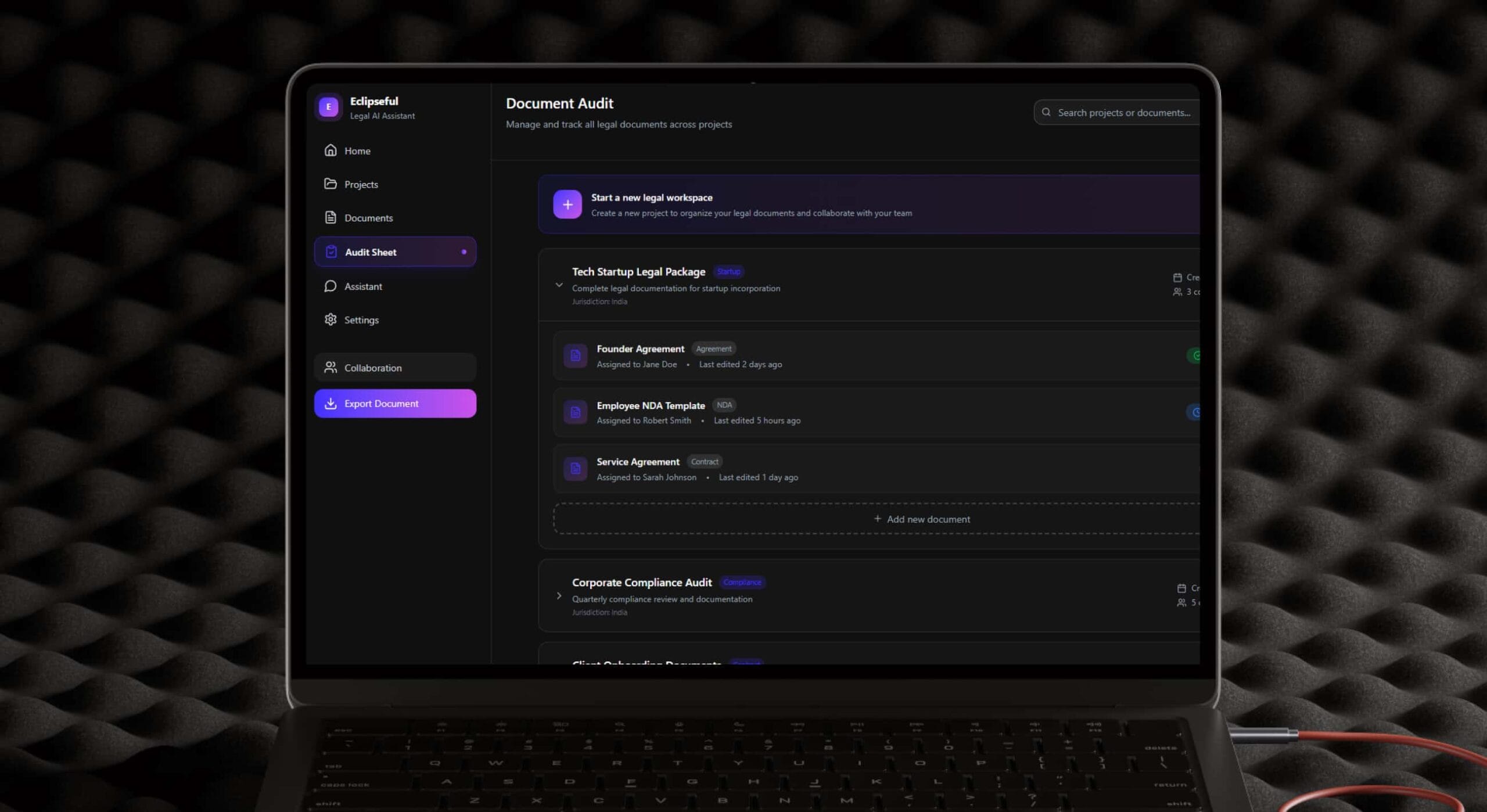
Teams experienced smoother approval and collaboration through digital workflows and export-ready formats.